
Professor John Duncan, Medical Director of the UK Epilepsy Society, discusses how epilepsy symptoms can be minimized with greater awareness of the condition among patients and physicians.
Neurosurgery and Epilepsy
Share
Mark CompleteCompleted
BookmarkBookmarked
Copy LinkLink Copied
Trending Topic
Developed by Touch
Mark CompleteCompleted
BookmarkBookmarked
Timothy Deer, President of the International Neuromodulation Society (INS), on how the attending global neuromodulation community at INS 2019 is set to experience a meaningful and unforgettable event. The International Neuromodulation Society’s 14th World Congress will be held in Sydney, Australia on 25–30 May 2019. Source: This video was produced by the INS and is shared […]
Mark CompleteCompleted
BookmarkBookmarked
Dr. Wei Hu, a Clinical Movement Disorders Fellow from the Neurology Department at the University of Florida and formerly at Mayo Clinic in Rochester, MN, gives hope in his article appearing in the November 2014 issue of Mayo Clinic Proceedings, to ...
Mark CompleteCompleted
BookmarkBookmarked
When medication is not enough to treat epilepsy sometimes surgery can be a good choice for treatment. While the more common methods are also invasive in many ways there are newer procedures being developed that require less recovery time.
Mark CompleteCompleted
BookmarkBookmarked
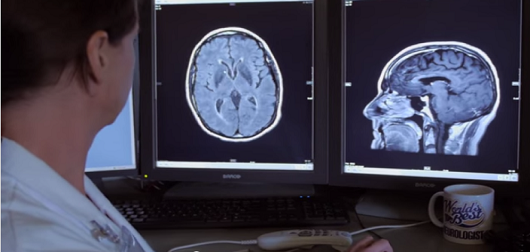
An essential tremor patient tells his story about life before and after successful Deep Brain Stimulation surgery.
Mark CompleteCompleted
BookmarkBookmarked
Juan Fernandez-Miranda, MD, associate director of the UPMC Center for Skull Base Surgery, discusses several recent advancements in EEA procedures, as well as ongoing research focusing on outcomes and survival rates.
Mark CompleteCompleted
BookmarkBookmarked
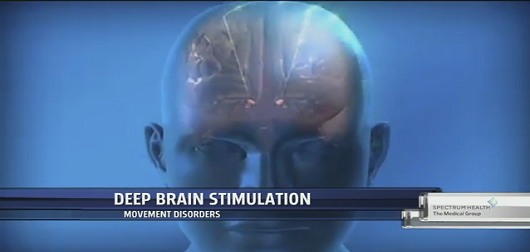
Deep brain stimulation is a surgical treatment in which a device called a neurostimulator delivers tiny electrical signals to the areas of the brain that control movement.
Mark CompleteCompleted
BookmarkBookmarked
Traditional spinal surgery for patients with degenerative disc disease and other related conditions is often relatively destructive. Lateral access surgery is an advanced, minimally invasive approach for spinal fusion in which the neurosurgeon gains access to the spine from the ...
Mark CompleteCompleted
BookmarkBookmarked
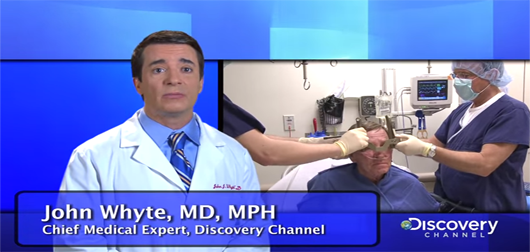
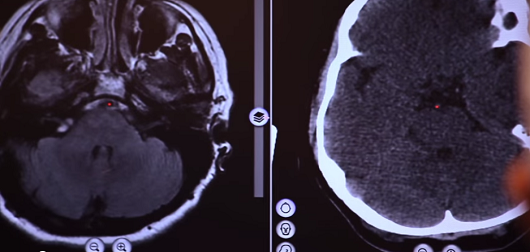
L. Dade Lunsford, MD, co-director of the Center for Image Guided Neurosurgery at UPMC offers a retrospective on the Gamma Knife and discusses why it has caused a shift in the paradigm of how neurosurgeons and oncologists care for patients ...
Mark CompleteCompleted
BookmarkBookmarked
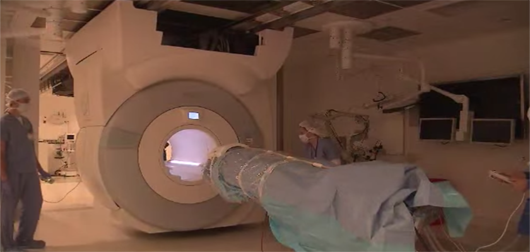
a typical CereTom®-Assisted Deep Brain Stimulation (DBS) procedure...
Mark CompleteCompleted
BookmarkBookmarked
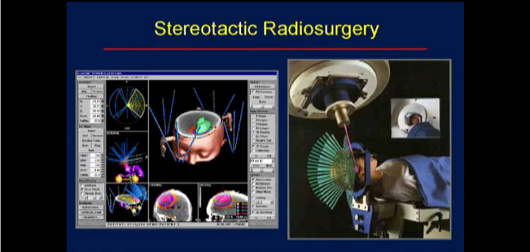
Instead of Whole Brain Radiation Therapy, which is devastating to patients due to possible complications such as swelling and cognitive decline, stereotactic radiosurgery is now available...
Mark CompleteCompleted
BookmarkBookmarked
Explanation of deep brain stimulation process and surgery as a treatment for Parkinson's disease at Cleveland Cleveland Mellen Center.
Mark CompleteCompleted
BookmarkBookmarked
Neil Martin, MD, chair of the UCLA Department of Neurosurgery and co-director of the UCLA Stroke Center, discusses new treatments for arteriovenous malformation (AVM), an abnormal collection of tangled blood vessels in the brain that can cause hemorrhage and stroke. ...
Mark CompleteCompleted
BookmarkBookmarked
An electrical implant placed in the brain can help symptoms of severe depression. CNN's Dr. Sanjay Gupta reports.
Log into your Touch Account
Keep track of your clinical interests and newsletter subscriptions.
Sign up with an Email
Or use a .
Register now for FREE access
Already registered? Login below.