Current Thinking
Epidemiology
Subarachnoid haemorrhage (SAH) is a severe disease: although SAH accounts for only 5% of all strokes, it is responsible for 25% of all fatalities related to stroke. The incidence of SAH has not decreased in recent years, remaining stable at around 10/100,000/year.1 SAH is more common in females than in males (3:2). Although SAH affects younger adults than those afflicted by cerebral infarction, the incidence of SAH increases with age.2
The most important vascular risk factors for SAH are:
Current Thinking
Epidemiology
Subarachnoid haemorrhage (SAH) is a severe disease: although SAH accounts for only 5% of all strokes, it is responsible for 25% of all fatalities related to stroke. The incidence of SAH has not decreased in recent years, remaining stable at around 10/100,000/year.1 SAH is more common in females than in males (3:2). Although SAH affects younger adults than those afflicted by cerebral infarction, the incidence of SAH increases with age.2
The most important vascular risk factors for SAH are:
• hypertension (relative risk [RR] in longitudinal studies 2.5, odds ratio [OR] in case–control studies 2.6);
• smoking (RR in longitudinal studies 2.2, OR in case–control studies 3.1); and
• high alcohol intake (RR in longitudinal studies 2.1, OR in case–control studies 1.5).3
Clinical Features
The classic clinical picture of SAH is that of a sudden-onset, very severe headache occurring during activity. Half of patients will have a disturbance of consciousness, ranging from a transient syncope to coma. Neck stiffness and other meningeal signs are the main findings on physical examination. Fundoscopy may reveal a retinal, subhyaloid or vitreous haemorrhage (Terson’s syndrome).4 Less commonly, SAH produces:
• motor defects;
• aphasia;
• seizures;
• ptosis;
• diplopia or a complete three-nerve palsy (posterior communicating artery aneurysm);
• visual troubles (carotid aneurysms);
• amnesia and psychiatric manifestations (anterior communicating artery aneurysm);5
• radicular pain mimicking sciatica;
• back pain; or
• a coup de poignard syndrome.6
SAH is preceded in about 10% (0–40%) of cases by a ‘sentinel headache’ or warning leak – an episode of headache similar to that of SAH, preceding it by days or weeks. This is in fact a minor undiagnosed SAH.7
Clinical Differential Diagnoses
Headache is a very common complaint that is rarely caused by SAH. Even among acute-onset headache, SAH accounts for only 11% of cases.8 One-quarter of patients with acute SAH are not diagnosed on their first medical encounter,9 the most common misdiagnoses being migraine, tension headache and headache related to high blood pressure.
Confirmation of Diagnosis
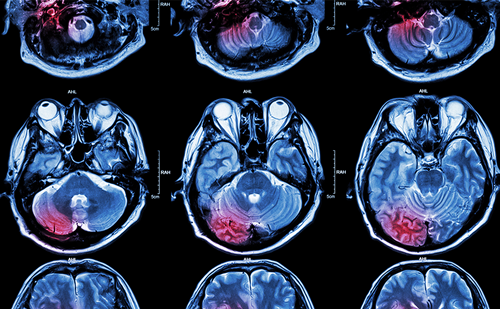
SAH is confirmed by the presence of subarachnoid haematic densities on an early brain computed tomography (CT) scan. The sensitivity of a CT scan ranges from 90 to 100%.10 Sensitivity is influenced by the amount of blood in the cerebrospinal fluid (CSF) and by the time elapsed since the onset of symptoms. Thirty per cent of scans will be negative within four days after the initial bleeding.
If the CT scan is negative and SAH is still suspected, a delayed (>12-hour) lumbar puncture must be performed to detect CSF xanthochromia. Xanthochromia in the CSF is due to bilirubin from haemoglobin. It develops between two and 12 hours after bleeding and takes at least two weeks to clear. Spectrophotometry of the CSF is the recommended method of analysis. This should be performed on the final bottle of CSF collected. 11 The sensitivity of CT scan combined with lumbar puncture for confirmation of the diagnosis of SAH is 100%.12 Magnetic resonance imaging with fluid-attenuated inversion recovery (FLAIR) and T2* sequences is also useful for detecting cases with delayed presentation.
Aetiological Diagnosis
The main cause (three-quarters of cases) of SAH is a ruptured intracranial aneurysm. Less common causes include:
• cranio-cerebral trauma;
• arterio-venous malformations;
• dural fistulae;
• dural sinus thrombosis;
• intracranial arterial dissection;
• mycotic aneurysms;
• bleeding diseases; and
• drugs.
Exceptionally, aneurysmal SAH is due to monozygotic disorders, such as primary connective tissue diseases (Ehlers-Danlos, Marfan’s syndrome, pseudoxantoma elasticum), neurofibromatosis type 1 and polycystic kidney disease.
To identify the aneurysm and allow urgent treatment to prevent re-rupture, angiography must be performed as soon as possible. Magnetic resonance angiography can detect an aneurysm of >3mm, but is less sensitive than intra-arterial angiography and produces false-positive results.13 CT angiography is increasingly being used in the detection and treatment planning of intracranial aneurysms. The sensitivity of CT angiography compared with intra-arterial angiography is around 95%.14 If no aneurysm or other cause is found, angiography must be repeated within days to two weeks, although the yield of repeat angiography is very low (~2%). Aneurysms are multiple in about 25% of cases. Patients with multiple aneurysms are usually younger than those with single aneurysms and more often have a family history of SAH. Repeat angiography is not warranted if the first angiography is negative.
Localised variants of SAH include perimesencephalic and subpial SAH. In perimesencephalic SAH, haematic densities are limited to the perimesencephalic cisterns, with no blood on the convexity, the interhemispheric fissure or the vertical part of the Sylvian fissure.15 This pattern only applies to patients with early (less than four days) CT scans. Perimesencephalic SAH is rarely due to aneurysmal rupture (<10%), and is considered to be of venous origin or due to intramural dissection. Perimesencephalic SAH has a benign course, although it can be complicated by hydrocephalus. In subpial SAH, haematic densities are restricted to a small zone of the brain convexity, usually between two convolutions. Subpial SAH may have several causes including mycotic or distal aneurysms, arteriovenous malformations, dural fistulae, cortical vein thrombosis, reversible cerebral vasoconstriction syndromes and amyloid angiopathy.16
Clinical Course and Prognosis
The most important neurological complications found in SAH are re-bleeding,17 intracerebral haematoma and intraventricular haemorrhage, vasospasm, delayed cerebral ischemia, hydrocephalus and seizures. Re-bleeding peaks in the first days after the first bleeding and is more frequent in patients with poor clinical condition and in those with large aneurysms. If the aneurysm is not treated, the risk of re-bleeding within four weeks is estimated to be 35–40%.18 After the first month, the risk decreases gradually from 1–2%/day to 3%/year.19 Vasospam peaks between the fourth and 15th day. The presence of vasopasm can be monitored daily using a transcranial Doppler. This has a high specificity (99%) and high positive predictive value (97%), but moderate sensitivity (67%) values when vasopasm involves the middle cerebral artery, and lower sensitivity and specificity for the anterior cerebral artery (76% specificity and 42% sensitivity).20 Systemic complications include fever, infections, electrolyte imbalance, deep venous thrombosis and pulmonary embolism, hypertension and cardiac complications. Cardiac complications are more frequent than in other strokes and include cardiac arrest, sudden death, pulmonary oedema and several rhythm and other electrocardiogram (ECG) changes that may even mimic acute myocardial infarction.21,22
The major prognostic factor in SAH is the severity of the initial bleeding. The clinical severity of SAH can be measured by grading scales, such as the Glasgow Coma Scale, Hunt and Hess, World Federation of Neurological Surgeons and Prognosis on Admission of Aneurysmal Subarachnoid Heamorrhage (PAASH)23 scales. The severity of subarachnoid bleeding can be measured by the Fisher’s or Hidja’s scales,24 which score the haematic densities in the admission scan. Unfavourable outcome is also associated with increasing age, posterior circulation and large aneurysms,25 intracerebral and intraventricular haemorrage, hypertension and time to treatment.26
SAH mortality ranges from 32 to 67%.27 Up to 15% of SAH patients die before arriving at the hospital. Twenty to 30% of the survivors are left with disablilities. Fewer than one-third of patients can return to their previous occupation and lifestyle.27 Epilepsy occurs in 7–12% of SAH survivors and is associated with cerebral infarction and subdural haematoma.28 Seizures are more frequent in patients treated surgically.29 Memory and executive deficits distress a number of SAH survivors, especially those with anterior communicating aneurysms. Among other less well-known effects are anosmia, neuroendocrine disturbances (pituitary deficiency)30 and sleep and wake disorders.31
Current Evidence-based Treatment
Patients with SAH should be referred urgently to a tertiary care centre with expertise in cerebral aneurysm treatment, including endovascular, neurosurgical and neurointensive care. SAH patients should be admitted to a stroke or a neurological intensive care unit.
Exclusion of the aneurysm from the systemic circulation can be performed by surgery (clipping) or through an endovascular procedure (coiling). Survival free of disability at one year is significantly better with endovascular coiling. This survival benefit continues for at least seven years. The risk of seizure is also lower with coiling. Although the long-term risks of further bleeding are low with either treatment, they are more frequent after coiling. Incomplete treatment is more frequent after coiling and there is uncertainty as to the rates of persistent long-term occlusion of the aneurysm.32–34 Selection of the best treatment depends on the morphology, size and location of the aneurysm (e.g. aneurysms with large necks are not convenient for coiling; posterior circulation aneurysms are best treated by endovascular techniques)35,36 and on the experience and performance of local neurosurgeons and endovascular interventionists. Coiled patients periodically need angiographic control. There is no reason no to adopt the same policy for clipped patients.
Patients with aneurysmal SAH grades I–III should be treated as soon as possible (<72 hours).37–39 Timing of intervention has only been investigated for surgical treatment. Currently, it is recommend that in a patient with acute aneurysmal SAH in whom both treatments are feasible, coiling is the preferred choice40 if it can be performed within 72 hours after SAH. Due to the lack of randomised trials, the management of patients with SAH grades IV and V on admission is less established. Treatment in an intensive care unit, ventricular drainage, haematoma evacuation, decompressive craniectomy and endovascular or surgical treatment of the aneurysm can benefit some of these patients, with a cost-effective ratio.41
Besides aneurysm treatment, bed rest, avoidance of Valsalva manoeuvres and control of blood pressure using an arbitrary cut-off of 180/100mmHg in patients with untreated aneurysms also contribute to decrease the risk of re-bleeding. Fibrinolytics decrease the probability of re-bleeding, but increase cerebral ischaemia and consequently poor outcome,40 and therefore should not be used.
Even if the aneurysm is successfully treated, the patient is still at risk of arterial vasospasm and delayed cerebral ischaemia. Adequate fluid replacement (at least three litres per day) and calcium-channel blockers are used to prevent vasopasm.43 Oral nimodipine 60mg every four hours should be started immediately after the diagnosis and continued for 21 days. Intravenous nimodipine is not routinely recommended due to it causing a potentially harmful decrease in blood pressure.43 Aspirin44 or enoxaparin45 should not be used in acute SAH to prevent delayed cerebral ischaemia. Neuroprotectors, such as tirilazad, do not improve the outcome of SAH patients.46
If vasospasm develops, triple H therapy (hypertension, haemodilution, hypervolaemia) is used to treat vasospasm. If this treatment fails, endovascular treatment, including balloon angioplasty47 or intra-arterial vasodilators (papaverine or nimodipine), is used in some centres. There is a lack of evidence from randomised controlled trials and meta-analyses demonstrating that triple H therapy or intravascular interventions reduce delayed cerebral ischaemia and improve outcome.48–51 When used, triple H therapy should be limited to a few days to reduce the risk of complications. Other treatments of uncertain efficacy and safety that are sometimes used include cysternal thrombolytic52 cysternal or intraventricular vasodilators53,54 and steroids.55
Acute hydrocephalus, when symptomatic, can be treated with external ventricular drainage. Repeated lumbar punctures are used in some centres, although they carry the theoretical risk of re-bleeding if the aneurysm is not treated beforehand. When hydrocephalus is associated with intraventricular haemorrhage, particularly if the amount of intraventricular blood is massive, the relief of hydrocephalus by shunting is more troublesome. There is no convincing evidence on the use of intraventricular fibrinolytics to prevent and treat hydrocephalus associated with intraventricular haemorrhage in SAH.56
Future Strategy
In the near future, health gains in SAH will depend on co-ordinated efforts between basic research (e.g. genetics and genomics, development and growth of aneurysms, pathophysiology of vasospasm and delayed cerebral ischaemia) and clinical research (e.g. screening and treating unruptured aneurysms, improving the diagnosis of SAH and the treatment of ruptured aneurysms, prevention of delayed cerebral ischaemia).
Bans on tobacco is expected to have an important impact on SAH incidence, as young women are a demographic group with rising rates of smokers in several countries. Furthermore, more than one-third of smokers continue to smoke after surviving an SAH.57
Familiar and genetic studies will help to identify individuals who are at higher risk of developing an aneurysm or suffering from an SAH. The risk of SAH is slightly increased in cases with one affected first-degree relative (OR=2.15) but strongly increased (OR 51.0) in cases with two affected first-degree relatives.58 Aneurysms are not usually congenital but develop, probably discontinuously, over a lifetime.59
Besides classic vascular risk factors, it will be important to identify factors enhancing or decreasing aneurysm growth, both for diagnostic purposes and as potential therapeutic targets.60 The identification of genes that predispose to SAH and intracranial aneurysms will help to further clarify the genetic profile of prone individuals. So far, although some susceptibility genes have been identified, both in association with and in genome-wide screen linkage studies,61 only a few have been replicated.62,63 The methodology of genetic studies needs to be refined.64 Currently, progress in the discovery of genetic determinants of cerebral aneurysm is modest and has not yet had any clinical impact on the decision to screen asymptomatic individuals for intracerebral aneurysms. The morphology of intracranial vessels may be an additional marker of higher probability of harbouring an aneurysm over a lifetime.65
The decision to screen with magnetic resonance or CT angiogram for unruptured aneurysms is currently limited to first-degree relatives of SAH patients with more than one first-degree relative with SAH or unruptured aneurysms and probably also in SAH survivors who fear recurrence.66,67 If an aneurysm is found, it is controversial whether or not it should be treated. Current evidence indicates that in patients with a life expectancy of at least 20 years, only aneurysms in the anterior circulation <7mm should be left untreated.68
Both screening and treatment decisions could change in the future if the safety of unruptured aneurysm treatment improves.69 Better neurointensive care and neuroanaesthesia and technological advances in endovascular devices70 may lead to a lowering of the threshold for treatment. Due to the rapid pace of technological advances, these will pose some difficulties in being evaluated by clinical trials because by the time the evaluation is complete, the technology will probably be obsolete.
Concerning the best modality of ruptured aneurysm treatment, longer follow-up of large series of patients treated by coiling is needed to ensure long-term completeness of aneurysm exclusion and risk of re-bleeding. Studies addressing cost-effectiveness issues of intracranial aneurysm treatment are also needed. The safety of stent-assisted coil embolisation and of all other innovations in endovascular treatment should be evaluated before they are disseminated.
Preventing and treating vasospasm is a challenge for the near future. Statins are a promising therapy.71,72 Nicardipine prolonged-release implants,73 nitric oxide donors, proteinase-activated receptor-1 antagonists,74 endothelin antagonists,75 potassium-channel activators and magnesium76 are among the drugs and classes of drugs yet to be evaluated in randomised clinical trials. Intra-arterial mechanical and pharmachological interventions to treat vasospasm and intracisternal thrombolytics also need to be evaluated by adequately powered randomised clinical trials.
Finally, we need more prospective studies on life after SAH, exploring ‘soft’ end-points (cognition, behaviour, sleep, ability to return to work, etc.) and quality of life, which are neglected in many prognostic studies conducted in SAH survivors. ■