
Charlene Gamaldo, M.D. Johns Hopkins neurology sleep specialist and medical director and Rachel Salas, M.D., Johns Hopkins neurology sleep specialist and assistant medical director of the Johns Hopkins Center for Sleep at Howard County General Hospital explain restless legs syndrome, its symptoms, causes and contributing factors, over-the-counter medications that can exacerbate symptoms, and treatment options. Appointments: 1-800-WESLEEP
Restless Legs Syndrome and Sleep – Diagnosis and Treatments
Share
Mark CompleteCompleted
BookmarkBookmarked
Copy LinkLink Copied
Trending Topic
Developed by Touch
Mark CompleteCompleted
BookmarkBookmarked
Explore ground-breaking advancements in the treatment of movement disorders in this insightful interview with Prof. K. Ray Chaudhuri, who shares his key takeaways from the 10th Congress of the European Academy of Neurology meeting in Helsinki. He discusses promising new therapies, personalized care approaches, and significant research on the staging of Parkinson's. Additionally, Prof. Chaudhuri emphasizes the importance of holistic treatment, stepped-care strategies, remote management, and the potential of wearable technology in improving patient outcomes, bringing his wealth of knowledge and insights to touchNEUROLOGY
Mark CompleteCompleted
BookmarkBookmarked
Key topics and highlights from the Late-Breaking News session at the European Academy of Neurology (EAN) meeting are discussed in this interview, where Dr. Miguel Miranda provides valuable insights. He addresses unmet medical needs in dementia, aging, and movement disorders, drawing on his experience from Unidade Funcional de Neurologia, Hospital de Cascais Dr. José de Almeida, Cascais, Portugal, as he joins touchNEUROLOGY.
Developed by Touch
Mark CompleteCompleted
BookmarkBookmarked
The 17th World Congress on Controversies in Neurology (CONy) took place March 23-25 2023 in Dubrovnik, Croatia. Prof. Amos D. Korczyn, CONy President (University of Tel-Aviv, Tel-Aviv, Israel) joined touchNEUROLOGY to discuss the main aims and focus of the recent CONy ...
Developed by Touch
Mark CompleteCompleted
BookmarkBookmarked
touchNEUROLOGY caught up with the INS President, Prof. Marc Russo, to discuss the upcoming congress and what to expect. The International Neuromodulation Society (INS) is excited to announce the relaunch of the in-person INS 15th World Congress in Barcelona, Spain, ...
Mark CompleteCompleted
BookmarkBookmarked
NEW
The International Parkinson and Movement Disorder Society (MDS) is a professional society of clinicians, scientists, and other healthcare professionals, who are interested in Parkinson’s disease, related neurodegenerative and neurodevelopmental disorders, hyperkinetic movement disorders, and abnormalities in muscle tone and ...
Developed by Touch
Mark CompleteCompleted
BookmarkBookmarked
Ecopipam is an investigational first-in-class drug being evaluated for the treatment of children and adolescents with Tourette’s syndrome. Prof. Donald Gilbert (Cincinnati Children’s Hospital Medical Centre, Cincinnati, OH, USA) discusses the randomised, double-blind, placebo-controlled phase 2b study investigating ...
Developed by Touch
Mark CompleteCompleted
BookmarkBookmarked
Functional neurological symptoms have been observed in young people globally during the COVID-19 pandemic, presenting with rapid onset of complex motor and vocal tic-like behaviours. Dr Davide Martino (Hotchkiss Brain Institute, University of Calgary, Calgary, Canada) discusses the rise in ...
Developed by Touch
Mark CompleteCompleted
BookmarkBookmarked
NEW
Prof. Angelo Antonini (Professor of Neurology, University of Padua, Padua, Italy) discusses the key clinical highlights and hot topics in movement disorders and Parkinson's disease. Questions: What are the key clinical highlights from the past year in the field of ...
Developed by Touch
Mark CompleteCompleted
BookmarkBookmarked
Gastrointestinal dysfunctions represent one of the main non-motor symptoms in Parksinon’s disease (PD). Prof. Angelo Antonini (Professor of Neurology, University of Padua, Padua, Italy) discusses a study that investigated α-Synuclein seeding activity in stomach-duodenum biopsies of PD patients by ...
Mark CompleteCompleted
BookmarkBookmarked
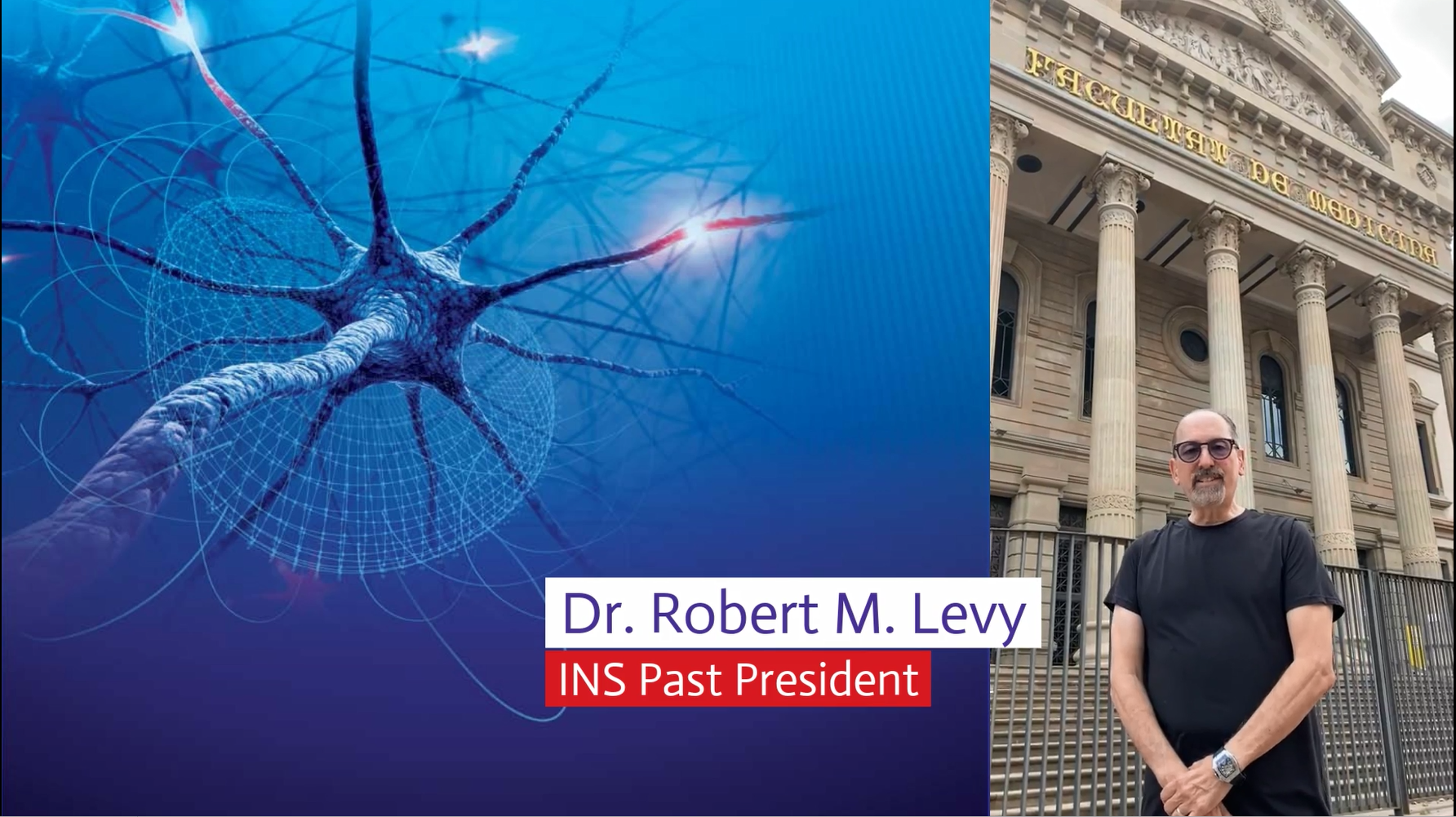
Dr Robert M. Levy (INS Past President) and Dr Carlos Tornero Tornero (Congress Chair) invite you to join the International Neuromodulation Society (INS) 15th World Congress, 21-26 May 2022, held in Barcelona, Spain. The INS 15th World Congress, themed Neuromodulation: From ...

Mark CompleteCompleted
BookmarkBookmarked
NEW
touchNEUROLOGY met up with Prof. Giuseppe Lauria Pinter (University of Milan, Milan, Italy) to discuss the efficacy and outcome measures of a phase 2 study investigating guanabenz for the treatment of amyotrophic lateral sclerosis. The abstract entitled: ‘The unfolded protein response ...
Mark CompleteCompleted
BookmarkBookmarked
EAN President, Prof. Claudio Bassetti invites you to participate in the EAN 2020 congress. You can register for the virtual congress free-of-charge here. It’s a fantastic opportunity for everyone in the neurology community to benefit from the possibility of education, ...
Mark CompleteCompleted
BookmarkBookmarked
It was an absolute pleasure to meet with Angela Vincent, Emeritus Professor of Neuroimmunology at the University of Oxford. Until 2016 she led the clinical and research laboratory at Oxford specialising in antibody-mediated neurological diseases. Despite not being a neurologist herself, ...
Log into your Touch Account
Keep track of your clinical interests and newsletter subscriptions.
Sign up with an Email
Or use a .
Register now for FREE access
Already registered? Login below.