Recently, the widespread use of magnetic resonance imaging (MRI) has called attention to the wide range of leukoencephalopathies that can be encountered clinically—these disorders highlight disconnection as a central theme of cognitive neuroscience.1 In this article, the leukoencephalopathies will be discussed as common clinical problems that illuminate the role of white matter in both normal cognitive function and in the disconnection syndromes receiving increasing attention. This emphasis on white matter influences not only the care of many neurologic and psychiatric patients, but adds significantly to the research agenda of cognitive neuroscience.
Basic Science Aspects of White Matter
White matter occupies nearly half the volume of the adult cerebrum. Approximately 165,000km of myelinated fibers course within and between the hemispheres,4 linking cortical and subcortical gray matter areas into an extraordinarily complex web of interconnected structures. Of the three types of fiber systems—projection, association, and commissural—the latter two are devoted primarily to cognitive functions, whereas the projection fibers subserve elemental motor and sensory systems.At a microscopic level, the myelininvesting axons in the brain are a mixture of 70% lipid and 30% protein, which dramatically increases conduction velocity by the phenomenon of saltatory conduction. Mounting evidence supports the notion that damage to myelin, and particularly to axons, reduces the speed of cognition in association with the slowing of conduction velocity.3
In general, white matter in the brain can be envisioned as enabling information transfer, in contrast to the information processing subserved by gray matter. Normal cognition requires both of these features, permitting specific mental operations in such realms as memory, language, and visuospatial function, as well as the efficiency with which they are performed.A useful parallel distinction is that white matter provides macroconnectivity in the brain—between remote gray matter regions—as opposed to the microconnectivity occurring within gray matter via synaptic function. White matter tracts therefore connect widely dispersed gray matter regions into coherent neural ensembles— distributed neural networks—that are thought to mediate all aspects of higher function.5
The precise neuroanatomy of white matter is understood only at a rudimentary level, as most information has been gathered from tracing studies in non-human primates and limited investigations of postmortem human brains.The origin, termination, course, and interdigitation of white matter tracts remain largely obscure; therefore, the function of these tracts can only be inferred in tentative terms.The importance of white matter for human cognition is suggested by many lines of evidence, including a wealth of information on the role of myelinated systems in development, aging, and behavioral neurology.3 White matter may also be crucial in human evolution—a recent MRI study concluded that prefrontal white matter volume is the singular distinguishing feature between the brains of humans and non-human primates.6
Leukoencephalopathies
In clinical neurologic practice, disorders of white matter are commonly seen at all ages, and their prevalence is increasing as identification of new leukoencephalopathies with MRI is progressing continuously. Multiple sclerosis (MS) is the most familiar CNS white matter disease of adults, but is just one of more than 100 clinical entities in which white matter is prominently or exclusively affected.3 Genetic, demyelinative, infectious, inflammatory, toxic, metabolic, vascular, traumatic, neoplastic, and hydrocephalic disorders may all produce leukoencephalopathies, and, remarkably, some form of neurobehavioral impairment has been associated with every disorder previously described.3 In older individuals, leukoencephalopathy is extremely common, and usually manifests as MRI white matter lesions known as leukoaraiosis (LA). Although the origin and cognitive significance of these lesions have been controversial, it seems increasingly likely that LA typically results from cerebral ischemia and, when severe enough, has important consequences for cognitive function.7
The details of how leukoencephalopathy disrupts higher function has been receiving more formal study. Owing to the fact that most disorders of white matter are neuropathologically diffuse or multifocal, the most prominent clinical syndrome appears to be cognitive impairment; this syndrome may be of sufficient severity to meet criteria for dementia, in which case the term ‘white matter dementia’ is appropriate.8 Cognitive loss or dementia from leukoencephalopathy may be significantly underdiagnosed, as it is typically mild at the outset, and is easily mistaken for normal aging or a psychiatric disease. Focal neurobehavioral syndromes such as aphasia, apraxia, agnosia, and amnesia may also result from white matter lesions,1,9 and a variety of neuropsychiatric syndromes have been tentatively associated with white matter disorders.9 In all of these, disconnection of normally linked gray matter areas by white matter lesions provides a useful framework for considering clinical effects.
Neuroimaging
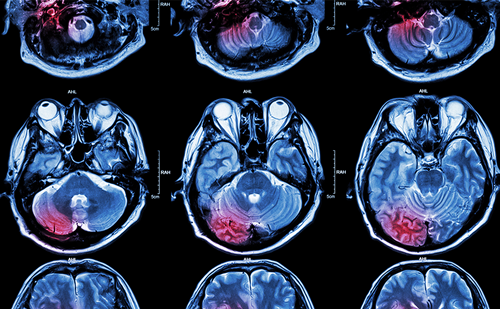
The introduction of MRI in the early 1980s exerted a profound effect on neurology. One of its most impressive advantages was the capacity to enable in vivo imaging of white matter as never before. MRI made it possible to see the white matter and its lesions directly, leading to many advances in the understanding of diseases such as MS, in which white matter pathology is a core feature. More recently, additional technologies have appeared, which further expand opportunities to investigate these disorders. One such method, diffusion tensor imaging (DTI), has the potential to identify white matter tracts and characterize the lesions that interrupt them; a wide range of normal and abnormal conditions may be illuminated by application of this ‘tractography’. Another innovation is magnetic resonance spectroscopy (MRS), which enables a ‘noninvasive biopsy’ of white matter regions to ascertain their chemical constituents. MRS promises to reveal, among other phenomena, the degree of axonal damage that accompanies a white matter lesion, thus affording more detailed information on the extent of neuropathological damage and the potential for recovery.These, and other techniques designed to assess white matter structure, are therefore joining the impressive technologies that can depict cortical metabolic activity—positron emission tomography (PET) and functional MRI (fMRI). The combination of structural and functional imaging offers an unprecedented opportunity to define the distributed neural networks that mediate cognitive operations.10
Clinical Implications
The clinical challenges posed by the leukoencephalopathies involve prevention, diagnosis, prognosis, and treatment.3 In terms of prevention, for example, emerging clinical and neuroimaging evidence increasingly indicates that LA may be benign until a certain burden of involvement is surpassed, so that vigorous attention to cerebrovascular risk factors, such as hypertension, diabetes mellitus, hypercholesterolemia, obesity, and smoking, can be pursued to avoid the onset of dementia.11 Diagnosis of leukoencephalopathy is perhaps the most common clinical question, and may involve a variety of blood, urine, and cerebrospinal fluid tests in addition to neuroradiological procedures.3 The prognosis of various leukoencephalopathies is important for predicting the clinical course with as much accuracy as possible.12 Finally, treatment of these disorders is vital, and naturally depends on the specific pathologic process involved; traditional therapies for demyelinative disease and other white matter disorders may soon be augmented by methods designed to enhance remyelination with the use of stem cell technology.13
Research Opportunities
A host of exciting research questions are readily evident in the context of white matter and its function. At the level of neuroanatomy, much work lies ahead in the effort to establish the precise identity and location of white matter tracts. It is not inconceivable that the entire anatomy of macroconnectivity in the human brain will be revised in light of findings from modern neuroimaging techniques, such as DTI. With this information, it will become possible to develop a deeper understanding of distributed neural networks that mediate higher functions by combining tractography with functional neuroimaging in the pursuit of localizing cognitive operations. Behavioral neurologists, neuropsychologists, and neuropathologists can add their expertise to blend clinical and pathologic data into the growing understanding of white matter disorders.14 Just as focal white matter lesions have provided the basis for studying many classic disconnection syndromes,1 diffuse and multifocal leukoencephalopathies will increasingly yield to the multidisciplinary study of connectivity now underway.15
Summary
The leukoencephalopathies represent a large and expanding group of neurologic disorders that present a unique opportunity for the study of white matter, disconnection syndromes, and cognitive neuroscience. After being relatively neglected in the investigation of cognition because of major gaps in understanding its structure and function, white matter has now assumed a more prominent position in the understanding of brain–behavior relationships. With the impressive advances of neuroimaging allied with clinical and neuropathological approaches, continued progress in this area can be expected, which will have important implications for both clinicians and neuroscience researchers.